
We’re back on our part-time Orkney island home of 15+ years, only able to spend 4 – 8 weeks per year given our work schedules, but it’s certainly home in a deeply relaxing and connected way.
Where the light changes by the minute, or the hour – always captivating with moody clouds, or misty fog, or sunlight glinting off the ocean. It’s a world of blues and greens. Grassy green fields turn to neon green when newly mown, then to pale green mixed with yellows and tans of wildflowers & old stems. The field left fallow can be covered with yellow buttercups and ragwort, pink fescue grass, and tall white hogweed, like Queen Anne’s Lace on steroids. Gray can be the other dominant color: with gray stone houses and dry-stone walls dividing fields; gray flagstone on shores and roofs, also used as walkways and floors; and gray clouds and seas in more shades of gray than you ever imagined.


Where the ocean changes in similar rhythm – deep blues striped with purple and turquoise over white sands; slate gray streaked with white-caps and the white gannets diving straight as torpedoes for the fish below; silvery glittering light bouncing off the surface and underlain with deep gray; bright sky blue in similar value to the bright green of newly mown hay fields; and smooth pale gray ocean switching colors with the solid line of clouds now turned from gray to deep blue as the light fades.


Where the birds greet us all day long with their cries and songs – the lapwings showing off in large flapping silent flocks – but I’m waiting for my favorite slide- trombone song of theirs (hear them here ); the skylark (the lav’rock in Burns’ poems) singing a crazy extended song of one drunken with love (or perhaps unrequited love) as it soars up 100s of feet before returning to ground (you can hear one here ; the curlew, the oyster catcher, and the red shank, often seen together, solo or in flocks, with songs instantly recognized; and the wee wren, with it’s new family in our bush of fuschia, the babies often flying over to alight on our windowsill right under our noses until a parent hurries it away; the more common starling and house sparrow also nest in our bushes, but the rarer snipe (only one heard this year) and even rarer corncrake (not heard for several years, but once we had 4 calling “crek-crek, crek-crek” in 4 directions around our house).
Our other neighbors are “the boys” (the yearly herd of new teenage cows), curious enough to come to our fence line when we talk to them, but easily frightened by a quick movement; the large white “rescue” ram (deaf and half-blind) with the two black lambs (ewe and ram) in the field over our garden wall; and on our daily walks – the herds of black angus, steers segregated from mothers with calves; mixed flocks of white sheep and Suffolk black-face with many twin lambs, grown fairly large since lambing is often in April.


Friends on the island freely open their doors to us for tea and biscuits and use of their wi-fi when it’s available. Chats range from poor puns and riddles, to the uncertainties of food arriving by ferry to the one co-op shop on our island; to how many bairns (children) are on the island this year to be able to keep the one nursery/primary school going; to difficult world politics. Wednesday Coffee Morning is always a treat for conversation and homebakes. Then there are the concerts, either on island in the school cafeteria during the annual Fun Weekend, or on the neighboring island when the small ferry between our islands is put on a special schedule so we can go over for dinner and the concert and be assured of getting back afterwards.
We love island life! Until next year, …. [Photos by Liz Sorenson]
An excerpt of a Robert Burns’ poem (also sung):
… The waken’d lav’rock warbling springs,
And climbs the early sky,
Winnowing blythe his dewy wings
In morning’s rosy eye; …”


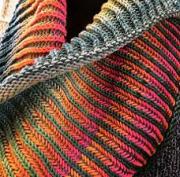
 In the Footsteps of Sheep, by Debbie Zawinski, is a wonderful specialized tour of Scotland in search of different breeds of sheep and enough of their bits of shed wool (along fence lines, blowing across the grass) to spin yarn and design and knit socks. She found 10 different breeds and includes patterns for 11 different socks. But the sense of place and love for her travels, often by foot and solitary, in all kinds of weather, meeting unusual folks along the way are enchanting. You may never knit socks, but you’ll enjoy reading this book.
 elix, is all about color in the UK as seen through her eyes in finding ways to incorporate the landscapes around her, as well as the daily objects she is drawn to by color and design and pattern, into the mesmerizing patterns of Fair Isle, also known as stranded colorwork, knitting. The beautiful photos may make you want to immediately start swatching in multi-colors. But you can also get happily lost in her enthusiasm for the daily beauty around her. She gives you her step-by-step directions and practical exercises if you want to follow her method, but she really wants to inspire you to find what makes you happy in the colors around you, and that’s definitely worth exploring.
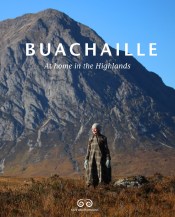 s on how the landscape influences the qualities of the fleece and named her yarn after one of her favorite West Highland mountains. The book is filled with evocative photos of that landscape, with Kate wearing her knitted creations (she is a designer of many knitting patterns). She is also an expert blogger, an academic and author in a former career. Her attention to detail, her inspired passion about the feel of the yarn, the quality of the light, the local food her husband cooks (here is a book where you get recipes as well as knitting patterns as well as a profound sense of place), are what make so many knitters follow her blog and her latest pattern release. The book is a treasure.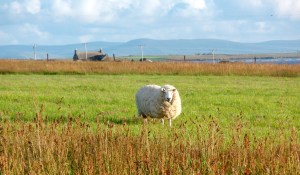


 SHEEP & SHAWL